
Office Technology
Why Refurbished Office Equipment Is Becoming a Smart Business Investment
 By Jimmy Fasusi, President and CEO, X-Class CorporationNovember 26, 2026
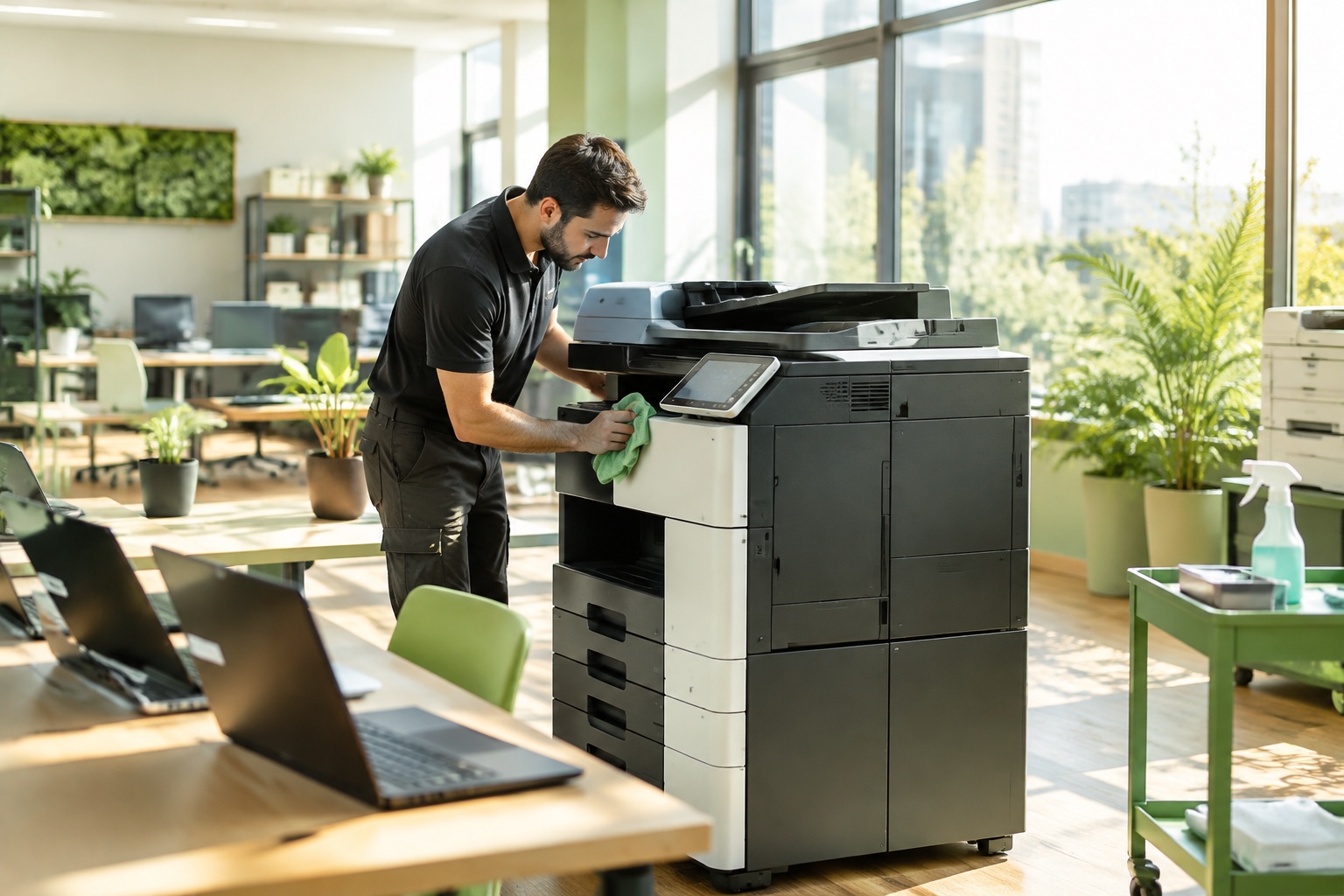
Every business must make decisions about how to allocate its financial resources.
From purchasing computers and printers to investing in office furniture, networking infrastructure and commercial equipment, operational expenses can significantly influence a company's ability to grow.
One purchasing strategy that deserves greater attention is the acquisition of professionally refurbished office equipment.
Although new equipment may provide the latest features and manufacturer support, refurbished technology can offer practical advantages for businesses seeking to balance performance, affordability and environmental responsibility.
The important question is not whether equipment is new or refurbished.
It is whether the equipment provides reliable value for the organization's operational requirements.
Understanding Refurbished Office Equipment
Refurbished equipment generally refers to previously owned or returned products that have undergone some form of inspection, cleaning, testing, repair or restoration before being offered for resale.
The extent of refurbishment can vary significantly between sellers.
A professionally refurbished commercial printer or copier may have received replacement components, maintenance, configuration and functional testing.
However, buyers should not assume that every product described as refurbished has undergone the same process.
Businesses should request clear information concerning equipment condition, refurbishment procedures, service history and available warranty protection.
1. Reducing Capital Expenditure
New commercial office equipment can represent a significant financial commitment, particularly for startups, nonprofit organizations and expanding small businesses.
Refurbished equipment may allow organizations to obtain suitable technology at a lower acquisition cost.
The financial resources preserved through responsible purchasing can potentially be redirected toward:
- Employee development.
- Marketing.
- Business expansion.
- Cybersecurity.
- Professional services.
- Customer acquisition.
- Working capital.
For businesses with limited resources, the ability to reduce unnecessary capital expenditure can contribute to financial flexibility.
2. Accessing Commercial-Grade Technology
Organizations sometimes purchase entry-level equipment because new enterprise-grade technology exceeds their available budgets.
However, a suitable refurbished commercial machine may provide capabilities that better align with business requirements.
These capabilities may include:
- Higher-volume printing.
- Multifunction document processing.
- Network connectivity.
- Duplex printing.
- Larger paper capacity.
- Advanced finishing options.
- Document scanning.
- Departmental access controls.
The suitability of a particular machine depends on its age, condition, compatibility, security support and expected usage.
Businesses should evaluate operational requirements rather than selecting equipment solely on the basis of price.
3. Understanding the Total Cost of Ownership
The purchase price of a printer or copier represents only one component of its financial impact.
Businesses should also evaluate:
| Cost Component | Purchasing Consideration | |---|---| | Acquisition cost | Initial equipment investment | | Consumables | Toner, ink and other supplies | | Maintenance | Preventive servicing requirements | | Replacement parts | Availability and expected costs | | Energy consumption | Operational electricity expenses | | Installation | Delivery, configuration and setup | | Downtime | Potential business disruption | | Security support | Availability of firmware and security updates | | Equipment lifespan | Expected remaining useful life |
An inexpensive machine may become costly if it requires frequent repairs or unusually expensive consumables.
Similarly, a well-maintained refurbished machine may provide satisfactory long-term value when it remains supported and appropriate for the business environment.
Purchasing decisions should consider the total cost of ownership rather than acquisition price alone.
4. Supporting the Circular Economy
The responsible reuse of office equipment can contribute to a more sustainable approach to business purchasing.
Manufacturing new electronic equipment requires materials, energy, transportation and distribution.
Extending the useful life of existing technology through repair, refurbishment and responsible resale can help reduce unnecessary disposal.
This approach supports the principles of the circular economy, where products and resources are maintained in productive use whenever practical.
The environmental advantages depend on factors such as equipment efficiency, remaining lifespan, transportation and repair requirements.
Nevertheless, responsible equipment reuse deserves consideration as part of a broader business sustainability strategy.
5. Creating Opportunities for Local Service Businesses
The refurbished equipment market involves more than buyers and sellers.
It can also create opportunities for technicians, repair centers, logistics companies, installation professionals and maintenance providers.
A refurbished copier purchased by a local business may require transportation, installation, network configuration and periodic servicing.
These complementary commercial activities can support specialized businesses within the local economy.
In regions such as Maryland, Washington DC and Northern Virginia, commercial equipment resale can contribute to business relationships between suppliers, customers and professional service organizations.
6. The Importance of Equipment Security
Modern office equipment can contain network interfaces, internal storage, authentication systems and document processing functions.
Businesses purchasing used printers or copiers should therefore consider cybersecurity and data protection.
Before purchasing previously owned technology, organizations should evaluate:
- Whether previous user information has been removed.
- Whether administrative credentials have been reset.
- Whether the manufacturer continues to provide relevant security updates.
- Whether the device supports the organization's network security requirements.
- Whether internal storage can be appropriately sanitized.
- Whether unnecessary services can be disabled.
Equipment that no longer receives important security updates may be unsuitable for organizations handling sensitive information.
Responsible purchasing must balance affordability with operational security.
7. Choosing the Right Equipment for Your Business
Not every organization requires the same technology.
A home-based business may need a compact multifunction printer. A law firm may require reliable scanning and document security. An architectural company may need wide-format printing. A commercial organization may require high-volume departmental copiers.
Before purchasing refurbished office equipment, businesses should assess their actual requirements.
Important questions include:
- How many pages will the organization print each month?
- Is color printing necessary?
- What paper sizes are required?
- Does the organization need scanning or document management capabilities?
- Is the equipment compatible with existing operating systems?
- Are replacement parts and consumables readily available?
- Is professional installation required?
- What warranty or maintenance support is available?
Answering these questions can help prevent unsuitable purchases.
What to Look for When Buying Refurbished Printers and Copiers
A responsible purchasing checklist should include:
| Inspection Area | Information to Request | |---|---| | Manufacturer and model | Accurate equipment identification | | Equipment condition | Used, refurbished or non-functional | | Meter reading | Previous usage where applicable | | Service history | Available maintenance records | | Refurbishment process | Details of testing and repairs | | Known defects | Transparent disclosure | | Warranty | Coverage, exclusions and duration | | Consumables | Included supplies and replacement costs | | Security | Firmware support and data sanitization | | Delivery | Shipping, installation and handling arrangements | | Ownership | Confirmation of lawful ownership |
Buyers should obtain clear information before completing transactions and understand the applicable return conditions.
Rockville Office Solutions and Responsible Business Procurement
Rockville Office Solutions recognizes the importance of connecting businesses with practical commercial resources.
Our marketplace brings together products, professional services, digital resources and business opportunities within a unified commercial environment.
The responsible resale of new, used and refurbished office equipment is consistent with our broader vision of sustainable commerce.
By connecting equipment sellers, commercial buyers and professional service providers, the marketplace seeks to support business relationships that extend beyond the initial purchase.
Businesses can benefit from considering both the equipment itself and the services necessary to maintain its long-term performance.
When Buying New Equipment May Be the Better Decision
Refurbished equipment is not always the most appropriate choice.
New equipment may be preferable when an organization requires extended manufacturer support, specialized security features, guaranteed compatibility, improved energy efficiency or particular contractual requirements.
Organizations operating in regulated environments may also have purchasing standards that restrict certain previously owned products.
A responsible marketplace should help customers understand their options rather than suggest that one purchasing strategy is suitable for every business.
The goal is informed procurement.
Conclusion: Smarter Purchasing Supports Sustainable Growth
Business success depends partly on how effectively organizations manage their resources.
Professionally refurbished office equipment can offer opportunities to reduce acquisition expenses, access commercial-grade technology and extend equipment lifecycles.
However, successful purchasing requires careful evaluation of product condition, maintenance requirements, security, compatibility and total ownership costs.
Sustainability should be supported by practical commercial decisions that protect both operational performance and financial resources.
The smartest business investment is not necessarily the newest equipment.
It is the equipment that delivers the appropriate value, reliability and performance for the organization's needs.
Jimmy Fasusi
Rockville Office Solutions
*Delivering Solutions that drives trade and business results.*
---
Frequently Asked Questions
Is refurbished office equipment worth buying?
Refurbished equipment can offer good value when its condition, remaining lifespan, maintenance requirements and security support meet the buyer's operational needs.
What is the difference between used and refurbished office equipment?
Used equipment has previously been owned or operated. Refurbished equipment has undergone some degree of inspection, repair, restoration or testing, although refurbishment standards vary.
Are refurbished copiers suitable for small businesses?
They may be suitable for small businesses when printing volume, maintenance costs, equipment condition and technical compatibility align with business requirements.
What should I check before buying a used printer?
Review the model, condition, meter reading where available, consumable costs, maintenance history, warranty, connectivity and security support.
Does buying refurbished equipment support sustainability?
Extending the useful life of suitable equipment may reduce unnecessary waste and support more efficient resource use.
Where can businesses explore used and refurbished office equipment?
Rockville Office Solutions provides a marketplace concept connecting buyers and sellers across office equipment, business technology and professional service categories.